If you notice a thin strip of light under your closed garage door, that gap is doing more damage than you might think. Mice can squeeze through openings as small as 6mm. Rain finds its way in during the monsoon season. Cold drafts make the space uncomfortable. The good news is that a simple garage door bottom seal replacement can fix all three problems in under two hours.
This guide walks you through everything you need to know, from choosing the right seal to installing it yourself.
Why the Bottom Seal Matters More Than You Think
The bottom seal is the rubber or brush strip that runs along the base of your garage door. It presses against the floor when the door closes, creating a barrier between your garage and the outside.
Over time, this seal cracks, flattens, or gets chewed through. Once it fails, your garage becomes an open invitation for pests, puddles, and wind.
A fresh seal creates a continuous, tight barrier. It keeps out water during heavy rains, blocks drafts, and cuts off the entry point that rodents rely on. It also protects stored items, tools, and flooring from moisture damage.
How to Stop Mice from Getting Under Your Garage Door
The answer starts with the seal, but it does not always end there.
Standard rubber seals wear down over time, and mice can chew through them. If rodents are actively entering your garage, a rodent-resistant seal is the better choice. Look for options that combine EPDM rubber with stainless-steel mesh or Xcluder fabric inside.
Mice cannot chew through stainless steel, so this type of seal holds up even when rodents try to push through.
Along with replacing the seal, pack any small holes around pipes or wall gaps with steel wool before covering them with silicone sealant. Set traps near likely entry points and remove food sources like birdseed or pet food stored near the garage.
Why Is Water Coming Under My Garage Door When It Rains?
The seal is usually the first place to look. A worn or flattened seal no longer makes full contact with the floor, leaving small channels where water can flow in.
Uneven floors make this worse. If your garage floor has a low spot in the center or near one side, water collects there and seeps under even a fairly decent seal.
The fix combines two things: a new, heavier rubber or bulb-style seal and a foam or rubber threshold. The threshold raises the contact point slightly, so the seal meets the floor properly even where it dips.
Choosing the Right Garage Door Weather Stripping
Garage door weather stripping comes in several styles, and the right one depends on your floor and your main problem.
A U-channel seal with an aluminum retainer works well for most standard flat floors. It slides into a track at the door’s base and creates a solid contact line across the full width.
A bulb or tubular seal gives you a thicker compression point. It is better for heavier rain and works on slightly uneven surfaces because the round profile adapts as it presses down.
A brush-style seal uses stiff bristles instead of rubber. This is the best garage door threshold seal for uneven floors because the bristles flex to fill gaps that a flat rubber seal would miss. Pair it with a rubber strip for full weather and rodent protection.
If mice are the main issue, go straight to a rodent-resistant kit that includes stainless mesh. Spending a little more up front saves you from having to replace the seal again in a few months.
Also Read: Emergency Garage Door Repair: What to Do When Your Door Won’t Open
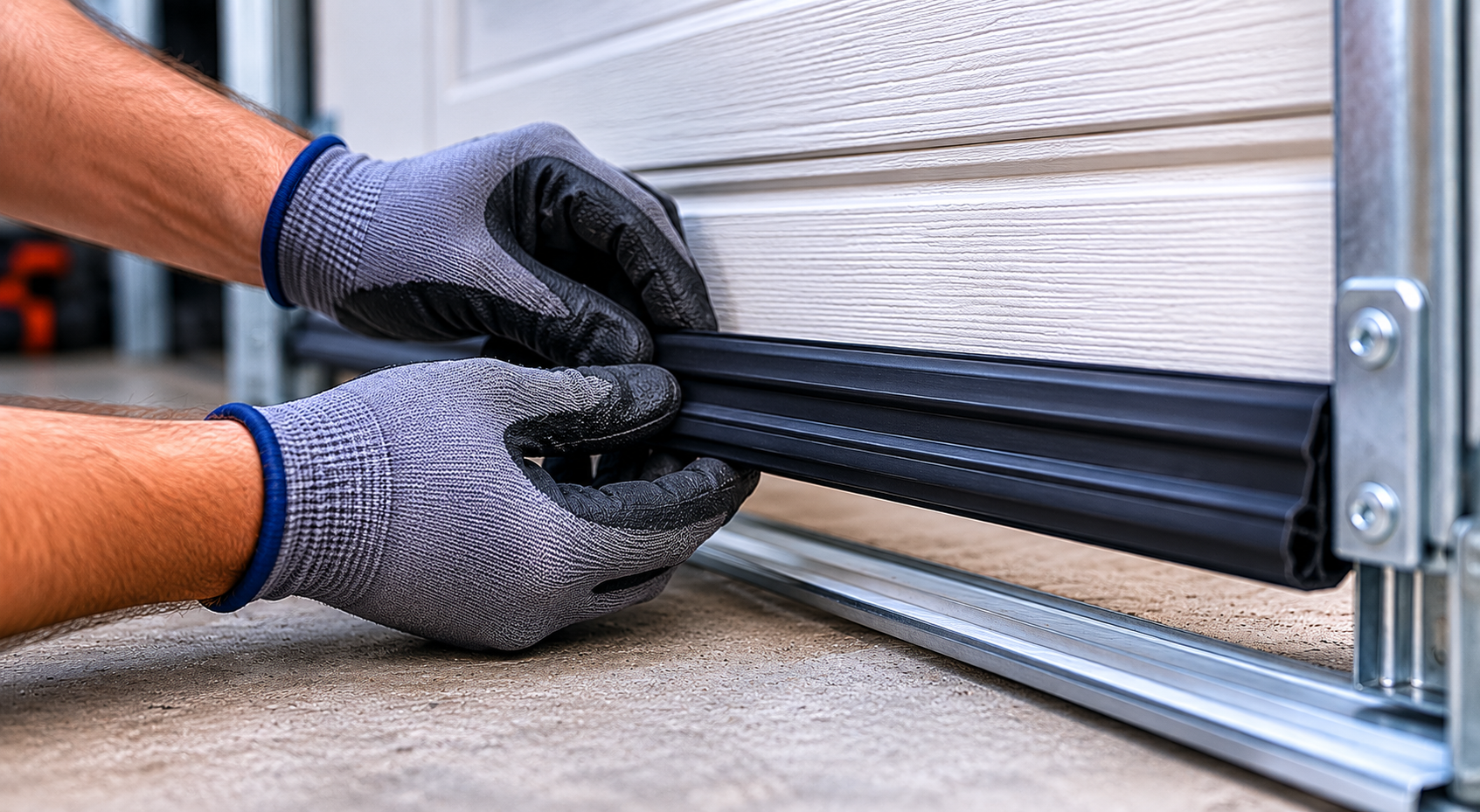
How to Replace a Garage Door Bottom Seal: Step by Step
Step 1: Disconnect the opener
Pull the release cord on your garage door opener so the door cannot move automatically while you work.
Step 2: Remove the old seal
Open the door fully. Slide the old seal out of its track, or loosen the retainer screws and pull the rubber free. Clean the bottom of the door and remove any old adhesive or rust.
Step 3: Cut the new seal to length
Measure your door width carefully. Cut the new seal and retainer to match, leaving a small gap at each end for expansion.
Step 4: Install the retainer
Fit the aluminum retainer into the groove at the door’s base. Pre-drill small pilot holes if your kit requires screws. Tighten them snugly without bending the retainer.
Step 5: Slide in the new seal
Feed the rubber or rodent-resistant strip into the retainer from one end. Work across the full width so it sits flat with no folds.
Step 6: Test the door
Reconnect the opener and close the door. Check for even contact with the floor across the full width. Look for gaps, binding, or any strain on the opener. If the door struggles to close, trim the seal slightly.
Step 7: Seal the ends
Apply silicone sealant to both ends of the retainer to stop water from wicking inside. Cap or plug any exposed edges.
How Often Should You Replace A Garage Door Weather Seal?
In areas like Delaware, Maryland, and the coastal parts of Delmarva, garage door weather seals typically last 3 to 5 years before they begin to crack, shrink, or flatten.
A good rule of thumb is to inspect the seal every six to twelve months, especially before the rainy season, hurricane season, or winter.
Look for cracks, tears, hardening, gaps, or signs of pests chewing through the rubber. If you see daylight under the garage door, feel a draft, or notice water entering during heavy rain, it is time to replace the seal.
Also Read: Signs Your Garage Door Track Is Bent or Misaligned
Quick Checklist Before You Buy
Before you head out to buy a seal, note down your door width, the gap height at the left, center, and right, and whether your floor is even. Also check if you see chew marks on the existing seal. These four details will point you to the right product and save you a return trip.
For homes dealing with recurring pest problems or persistent water intrusion, a combination of a quality rodent-resistant seal, a floor threshold, and a full inspection of other entry points gives you the most thorough protection.
Conclusion
When it comes to garage door bottom seal replacement, it is one of the more straightforward home maintenance tasks you can take on yourself. The right seal, installed correctly, keeps mice out, handles spring rain, and cuts down on drafts all at once.
Take the time to measure accurately, choose the right seal type for your situation, and test the door carefully after installation. A little attention to this one strip of rubber goes a long way toward keeping your garage dry, secure, and pest-free.