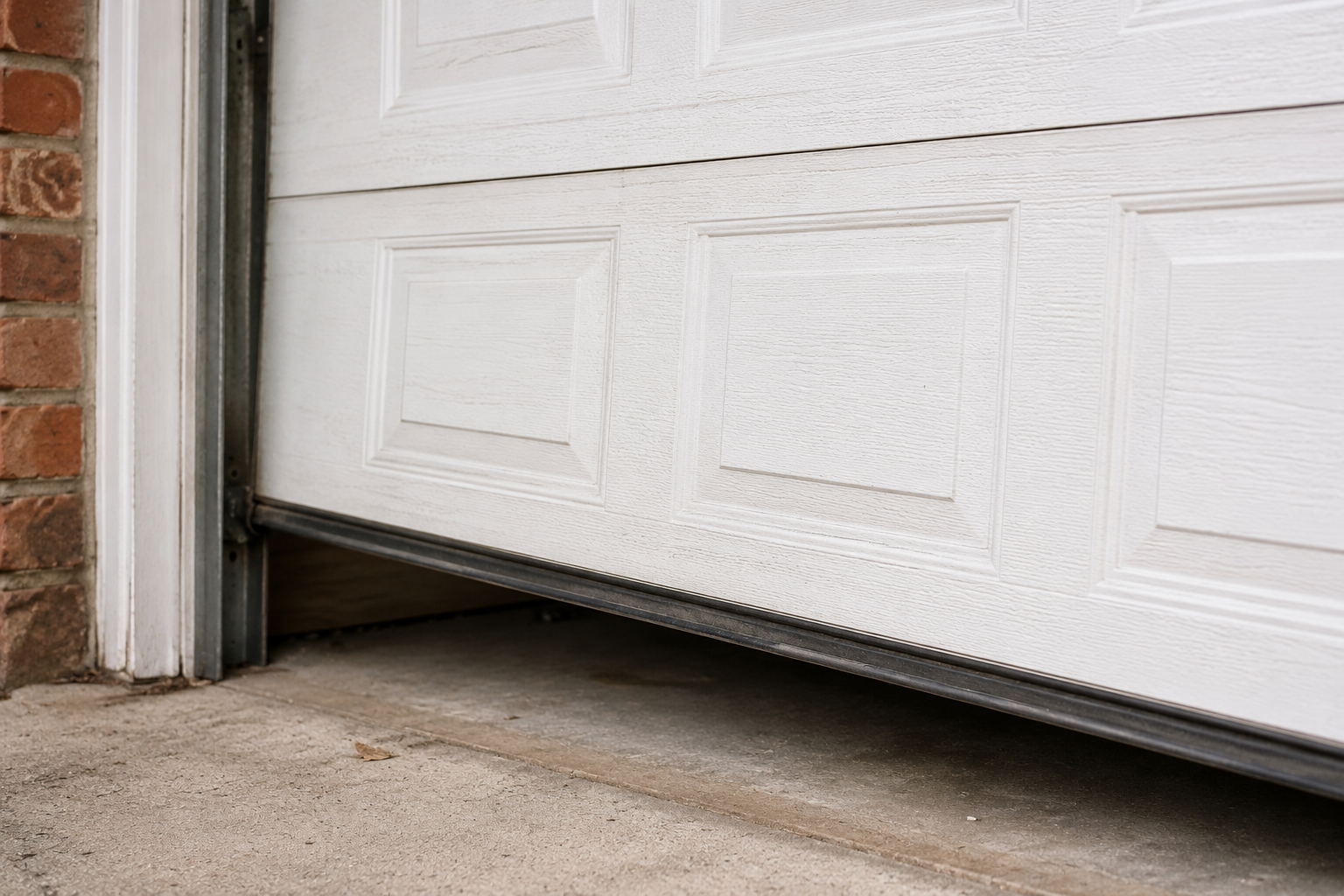
If you’ve noticed your garage door crooked when closing or sitting at an angle, you’re not alone. It’s one of the most common garage door problems homeowners run into. The good news? Most causes are straightforward to identify, and some fixes are easier than you might think.
Let’s walk through why this happens and what you can do about it.
What Makes a Garage Door Close Crooked?
A garage door is a system of moving parts that all need to work together. When one component is off, the whole door can go out of alignment. Here are the most common reasons you might see one side of your garage door higher than the other.
Spring Problems
Torsion and extension springs do the heavy lifting when your door opens and closes. If one spring is worn out, broken, or has unequal tension compared to the other side, the door will tilt. It simply can’t rise or lower evenly when the spring force isn’t balanced.
Lift Cable Issues
Each side of your garage door has a lift cable that supports it during movement. If a cable is frayed, has slipped off its drum, or has snapped entirely, that side loses support. The result is a door that sags on one side and gives you that classic crooked look.
Bent or Misaligned Tracks
The tracks guide your door rollers as the door moves up and down. If a track has a bend, a kink, or loose mounting brackets, the door can’t travel in a straight path. Even small misalignments in the track can cause noticeable tilting over time.
Worn or Jumped Rollers
Rollers are small wheels that run inside the tracks. When they wear down or jump out of the track, the door binds up on one side. This often shows up as a jerky, uneven closing motion.
Loose Hardware
Hinge bolts, track brackets, and panel fasteners can work themselves loose over years of use. When they do, panels can shift, and the door can go out of square.
Also Read: Commercial Garage Door Safety: How System Failures Create Serious Hazards
Why Is My Garage Door Crooked When Closing Specifically?
You might notice the door looks fine while it’s open, but starts tilting as it comes down. This usually points to a cable or spring issue, since those components are doing the most work during the closing motion. It can also happen if there’s debris in the track or if a safety sensor is partially blocked, which causes the door to hesitate on one side.
If the bottom of the door looks uneven when it’s fully closed, a sloped floor or worn weatherstripping could also be part of the picture.
Is a Crooked Garage Door Dangerous to Operate?
This is a fair question, and the honest answer is yes, it can be. A door that’s significantly out of balance puts extra stress on the opener, the tracks, and the cables. Over time, that strain can lead to parts failing unexpectedly.
The bigger concern is springs and cables. These components hold a lot of stored tension. If they fail while the door is moving, it can cause the door to drop suddenly. That’s why it’s important to stop using the door if you notice major binding, grinding, or visible damage to the springs or cables.
That said, not every crooked door is an emergency. A slightly uneven door caused by loose hardware or worn rollers is a much lower-risk situation. The key is identifying what’s actually causing the problem before deciding how to proceed.
Simple Checks You Can Do Right Now
Start with a visual inspection. Look at the springs along the top of the door. Do you see a visible gap or break in the spring? Check the cables on each side. Are they frayed, slack, or hanging off the drum? If the answer to either of those is yes, stop using the door and skip straight to calling a professional.
If the springs and cables look intact, check the tracks on both sides. Are any brackets loose? Is there visible bending or debris inside the track? Tightening loose bracket bolts is a safe, simple fix you can handle with basic tools.
You can also lubricate the rollers, hinges, and bearings using a silicone-based or garage-door-specific lubricant. Dry, stiff hardware can cause binding that makes the door appear more uneven than it actually is.
Finally, test the door’s balance. Disconnect the opener using the emergency release cord, then manually lift the door to about halfway. A well-balanced door will stay in place. If it drops to one side, the springs or cables need professional adjustment.
Also Read: How an Insulated Garage Door Can Reduce Winter Energy Bills
Can I Fix a Crooked Garage Door Myself, or Do I Need a Pro?
If the issue is loose bolts, dirty tracks, worn rollers, or a roller that’s jumped off the track, those are reasonable DIY fixes for someone comfortable with basic hand tools.
If the issue involves springs, cables, drums, or pulleys, those repairs are best left to a trained technician. Springs and cables store significant mechanical energy. Adjusting or replacing them without the right tools and experience can lead to serious injury.
Major track damage, like a badly bent section or a track that’s pulled away from the wall, also falls into the call-a-pro category.
If you’re not sure which category your situation falls into, that’s also a good reason to get a professional opinion. A technician can do a full balance check, identify worn components before they fail, and make sure your door is operating safely.
At iTrust Quality, you can connect with trusted service professionals who handle exactly these kinds of garage door issues, from cable and spring repairs to full track realignments.
Conclusion
An uneven garage door fix starts with identifying the cause. Springs and cables are the most common culprits, but tracks, rollers, and loose hardware all play a role. Safe DIY fixes include cleaning tracks, tightening hardware, lubricating moving parts, and replacing worn rollers.
Anything involving springs, cables, or severe track damage should go to a professional. Catching the problem early prevents bigger repairs down the road. If you’re seeing one side of your garage door higher than the other, or your garage door is closing crooked, don’t ignore it. A quick inspection today can save you from a bigger headache later.