
If you are replacing old gutters or installing a new gutter system, you will quickly run into one key decision: seamless or sectional? Both types protect your home from water damage, but they work differently, cost differently, and hold up differently over time. For homeowners in Delaware, where the weather swings between humid summers, heavy fall rainfall, and cold winters, that distinction matters.
This guide breaks down exactly how the two systems compare so you can make a confident decision.
What Are Sectional Gutters?
Sectional gutters are assembled from pre-cut lengths of material, typically 10 to 20 feet long, joined together with connectors and sealant at every joint. They are the older, more traditional style and are widely available at hardware stores as a DIY-installable product.
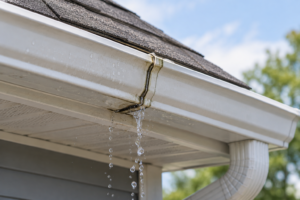
Each joint in a sectional system is a potential weak point. The sealant that holds joints together degrades over time from UV exposure, temperature changes, and moisture. As it breaks down, joints can separate or allow water to seep through. In Delaware’s freeze-thaw winters, this process accelerates because water that enters a joint expands when it freezes and widens the gap further.
Sectional gutters are typically made from aluminum, vinyl, or galvanized steel. Vinyl is the most affordable option but is also the least durable, prone to cracking in cold temperatures. Aluminum and galvanized steel hold up better but still have the same joint vulnerability.
What Are Seamless Gutters?
Seamless gutters are fabricated from a single continuous piece of material, cut to the exact length needed for each run of your roofline. The only joints in a seamless system are at the corners and downspout outlets, which keeps leak points to an absolute minimum.
The key feature of seamless gutters is that they are manufactured on-site. A contractor brings a portable roll-forming machine and produces gutters that fit your specific home dimensions precisely. There is no piecing together standard lengths to fit an irregular roofline.
Most seamless gutters are made from aluminum, though copper and steel options are available. Aluminum seamless gutters are lightweight, resistant to rust, and hold paint or finish well. They are by far the most common choice for residential homes across Delaware.
At Quality Garage Doors & Gutters, our professional gutter installation service in Delaware uses exactly this method. Each gutter is formed on-site to fit your home, so there are no gaps, no ill-fitting sections, and no guesswork.
Seamless vs. Sectional: A Direct Comparison
Leak Resistance
This is where seamless gutters have the clearest advantage. Sectional gutters have joints every 10 to 20 feet, and every joint is a point where water can eventually escape. Seamless gutters have joints only at corners and downspout connections, dramatically reducing the number of places where leaks can develop.
For Delaware homeowners dealing with heavy rainfall in spring and fall, fewer leak points means better protection for your foundation, fascia boards, and landscaping.
Durability and Lifespan
A well-maintained aluminum seamless gutter typically lasts 20 years or more. Sectional aluminum gutters can reach similar lifespans, but the joints tend to fail before the rest of the material wears out, which often means the system needs attention sooner.
Vinyl sectional gutters have a significantly shorter lifespan, often 10 to 15 years, and are particularly vulnerable to Delaware’s cold winters. They become brittle in freezing temperatures and can crack under the weight of ice or snow.
Also Read: How Long Do Gutters Last? When to Repair vs Replace: A detailed look at gutter lifespan by material type and when replacement makes more sense than repair.
Maintenance Requirements
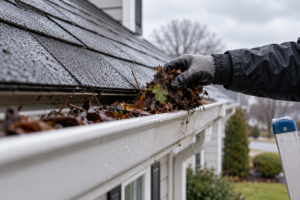
Both systems need regular cleaning to prevent debris buildup and clogs. Leaves, pine needles, and organic debris accumulate in gutters regardless of the type, and blocked gutters cause overflow that leads to real damage.
Sectional gutters require an additional maintenance task: inspecting and resealing joints. Every few years, the sealant at each joint should be checked and refreshed to prevent leaks. This is labor time and cost that seamless systems largely avoid.
For homeowners who want to minimize ongoing maintenance, pairing seamless gutters with a quality gutter guard system is the most effective approach. Our Champion Gutter Guard installation service reduces the frequency of cleaning needed and comes with a lifetime no-clog money-back guarantee.
Installation Process
Sectional gutters can be installed by a homeowner with basic tools, which is part of their appeal for DIY projects. However, getting joints properly sealed, the pitch correct for drainage, and the downspouts positioned well takes more skill than it looks on the surface.
Seamless gutters require professional installation because of the on-site fabrication equipment involved. This is not a project that can be done at home. The upside is that professional installation also means the pitch, placement, and downspout sizing are handled correctly from the start.
Cost
Sectional gutters are less expensive upfront. Materials are cheaper, and if you are willing to install them yourself, labor costs drop to zero. For a typical Delaware home, sectional gutter materials might run $200 to $400 for a basic installation.
Seamless gutters cost more upfront, typically $600 to $1,500 for a full residential installation, depending on home size, linear footage, and material choices. However, fewer repairs, fewer leak-related damage claims, and a longer overall lifespan often make seamless gutters the better financial decision over a 10 to 20-year period.
Also Read: Why Skipping Gutter Cleaning Can Damage Your Foundation, What happens when gutters fail to drain properly, and how to protect your home.
Which Is Right for Delaware Homes Specifically?
Delaware’s climate puts specific demands on gutter systems. Summers bring humidity and periodic heavy storms. Fall means significant leaf drop, especially in wooded areas across Kent County and Sussex County. Winters bring freeze-thaw cycles that stress joints and seals.
For most Delaware homeowners, seamless gutters are the more practical long-term choice for these reasons:
- Fewer joints means fewer failure points during heavy summer rain events.
- No joint sealant to degrade through freeze-thaw cycles.
- Less ongoing maintenance compared to sectional systems.
- Better fit for homes with non-standard rooflines or irregular dimensions.
- Higher resale appeal for homes in competitive real estate markets across New Castle County and beyond.
Sectional gutters may make sense for a short-term rental property, an outbuilding, or a homeowner who plans to sell within a few years and needs a low-cost functional fix.
What Size and Style of Seamless Gutter Is Right for Your Home?
Most Delaware residential homes are fitted with either 5-inch K-style or 6-inch K-style gutters. K-style gutters have a flat back and a decorative front profile that pairs well with most home styles. Half-round gutters are an option for older or historic homes where the rounded profile suits the architecture.
Wider gutters handle more water volume, which is relevant for homes with steep roof pitches or large roof surface areas. Your installer can calculate the right size based on your roof area and local rainfall data.
Downspout sizing and placement matter too. Undersized or poorly positioned downspouts restrict drainage and cause overflow even when the gutters themselves are clean. This is one of the areas where professional installation pays for itself.
Conclusion
For most Delaware and Maryland’s Eastern Shore homeowners, seamless gutters are the smarter long-term choice. Fewer leak points, a longer lifespan, and lower maintenance needs make them worth the higher upfront cost compared to sectional systems. Pair them with a quality gutter guard, and you have a system that protects your home through every season with minimal effort. Quality Garage Doors & Gutters fabricates and installs precision seamless gutters on-site, backed by over 40 years of experience and a commitment to getting the job done right. Call us at +1 302-678-3667 or request a free quote online to get started.