
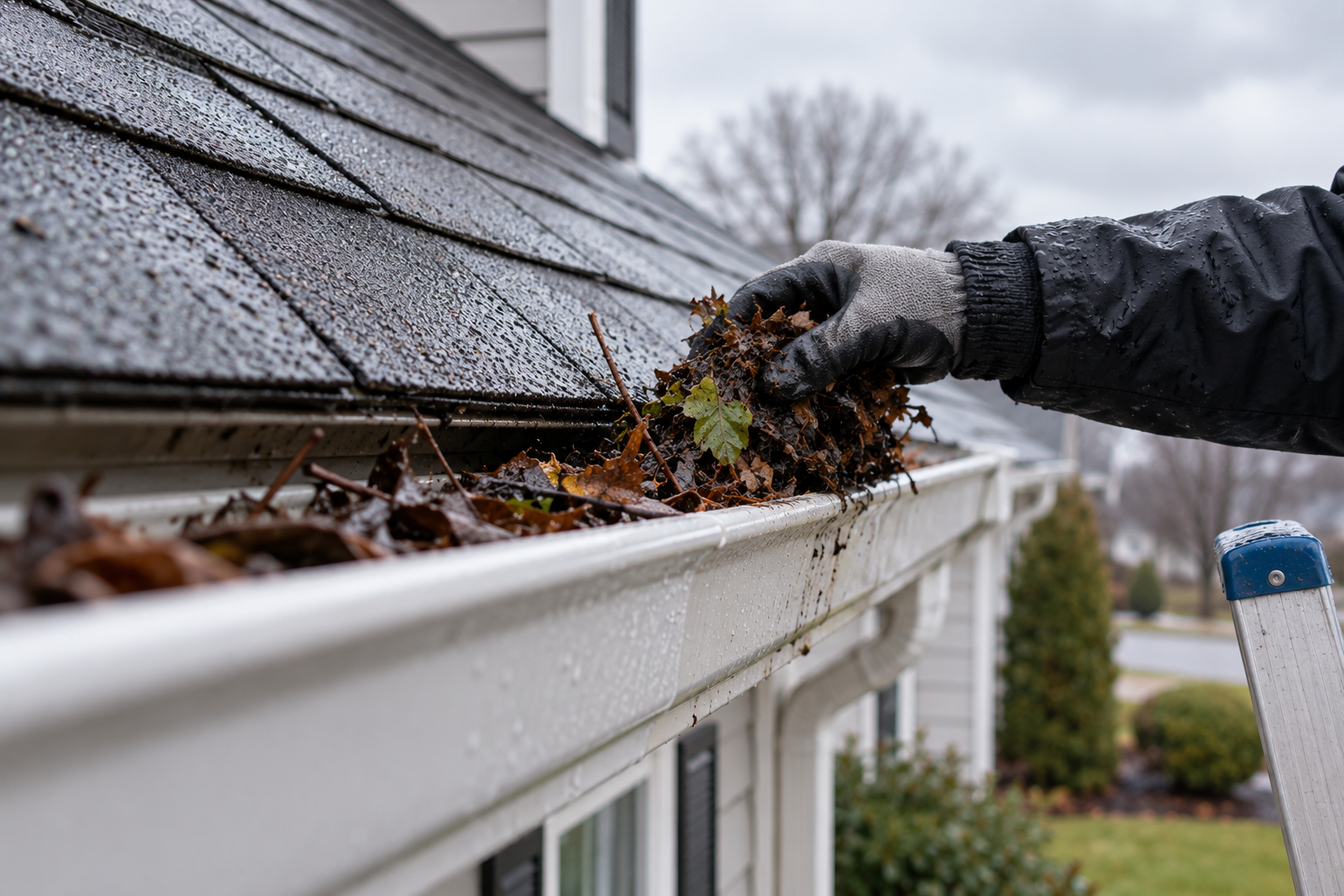
If your Maryland home sits under a canopy of oaks and pines, the standard advice to clean your gutters twice a year may not be enough. The right schedule depends less on the calendar and more on what is growing around your roof.
Trees, roof pitch, and how close your property sits to woods or open fields all change how fast your gutters fill. A home in a bare lot in Queen Anne’s County has very different needs from one tucked into the tree line in Caroline or Kent County.
This guide gives you a practical Maryland gutter cleaning schedule based on your specific trees and location, plus the warning signs that tell you it is time to clean sooner.
How Often Should You Clean Gutters in Maryland?
Most Maryland homes need their gutters cleaned at least twice a year, once in late spring and once in late fall. Homes surrounded by heavy tree cover often need three or four cleanings a year to stay clear.
The twice-a-year baseline works for properties with few nearby trees. Once you add mature hardwoods or pines to the picture, debris builds up faster than a single spring and fall cleaning can handle. Your job is to match the frequency to your surroundings, not to a generic rule.
Also Read: How Often Should A Gutter Be Cleaned? The general frequency guidelines every homeowner should know.
Why Your Trees Decide Your Gutter Cleaning Schedule
Not all trees shed the same way. The species around your home is the single biggest factor in how often your gutters clog.
Pines (loblolly, white pine): Pine needles are the hardest debris on gutters. They shed in large amounts through fall and again in spring, mat together into dense clumps, and slip straight through many standard guards. Homes with pines nearby often need cleaning three to four times a year.
Oaks: Common across Maryland, oaks drop leaves late into fall and shower acorns and catkins in spring. That gives them two heavy shedding seasons, so oak-shaded homes usually need at least three cleanings a year.
Maples and sweetgum: These drop broad leaves quickly in autumn, along with helicopter seeds or spiky seed balls that jam downspouts. A thorough fall cleaning is essential, with a spring check for seed debris.
Tulip poplar and willow oak: Popular on the Eastern Shore, these shed steadily and produce fine debris that packs down over time. Steady shedding means steady buildup, so plan on more than the minimum.
If you have a mix of these species, plan your schedule around the messiest tree on your property.
How Your Location and Roof Change the Frequency
Two homes on the same street can need different schedules. Location details matter more than most homeowners expect.
Distance from tree lines: A home set back from woods collects mostly its own leaves. A home right against a tree line catches debris from every tree that overhangs the roof, including neighbors’ trees.
Roof pitch: Steep roofs shed debris into gutters faster and harder. Low-slope roofs let leaves sit and rot in the trough, which speeds up buildup and corrosion.
Number of stories and valleys: Complex rooflines with multiple valleys funnel debris into concentrated spots. Those trouble areas clog long before the rest of the system.
Open, windy lots: Homes on open farmland catch wind-blown leaves, seeds, and grit even without many trees of their own. Coastal Sussex-adjacent properties also deal with salt air and sand that settle into gutters.
When you know your trees and your location, you can set a schedule that actually fits your home.
A Simple Gutter Cleaning Schedule for Maryland Homes
Use this as a starting point, then adjust based on what you find in the gutters each visit.
- Few or no nearby trees: Twice a year. Late spring (May) and late fall (November).
- Mixed hardwoods nearby: Three times a year. Spring, early fall, and late fall.
- Pines or heavy tree cover: Four times a year. Spring, mid-summer, early fall, and late fall.
- After major storms: Always check gutters after a Nor’easter or heavy wind event, regardless of season. Storms can dump a season’s worth of debris in a day.
The late-fall cleaning is the most important one on the Eastern Shore. Clearing gutters before the first freeze prevents trapped water from icing up and pulling on your gutters and fascia.
Also Read: Why Skipping Gutter Cleaning Can Damage Your Foundation What happens when overflowing gutters send water where it does not belong.
Signs Your Gutters Need Cleaning Before the Next Scheduled Visit
A schedule is a plan, not a rule. These signs mean your gutters need attention now.
- Water spilling over the edge during rain instead of flowing to the downspout
- Plants or grass sprouting in the gutter trough
- Sagging sections or gutters pulling away from the fascia
- Staining or streaks on the siding below the gutter line
- Birds or pests nesting in the gutters
- Pooling water near your foundation after storms
If you notice any of these, move up your next cleaning. Waiting only lets small problems grow into repairs.
Should You Add Gutter Protection to Your Maryland Home?
If you are cleaning gutters three or four times a year, quality gutter protection can cut that work dramatically. A good guard keeps leaves, needles, and seeds out while letting water flow through.
Our Champion Gutter Guard is built for exactly the tree-heavy conditions common across Maryland, and it comes with a lifetime no-clog, money-back guarantee. Even with guards installed, an occasional check keeps everything flowing at its best, especially under pines.
Why Maryland Homeowners Trust Quality Garage Doors & Gutters
For more than 40 years, homeowners across Delaware and Maryland have counted on our team for honest, thorough gutter care. We know the trees, the storms, and the seasons of the Eastern Shore, and we build our service around them.
Whether you need a one-time clear-out or a regular schedule, our certified professionals handle it cleanly and leave your property tidy. Ask us about professional gutter cleaning, and we will help you set the right frequency for your home.
Frequently Asked Questions
Most Maryland homes need cleaning at least twice a year. Homes near heavy tree cover, especially pines and oaks, often need three to four cleanings annually to prevent clogs and overflow.
Late spring and late fall are the two key windows. The late-fall cleaning, done before the first freeze, is the most important because it prevents trapped water from icing and damaging your gutters.
No. Guards greatly reduce debris and the frequency of cleaning, but fine material and pine needles can still collect over time. An occasional check keeps a guarded system flowing properly.
Yes. Tree species are the biggest single factor. Pines and oaks shed heavily and in more than one season, so homes surrounded by them need cleaning far more often than homes on open lots.